Ash on the burned slope
Wildfire leaves ash and loose material on the ground. How much stays in place depends on the slope, soil, and remaining vegetation.
SEALab / Research
Our team aims to improve the understanding of processes that affect soil and water quality. In particular, we probe how anthropogenic and natural stressors in changing climates affect the fundamental physical, geochemical, and biological processes responsible for the removal of particle and particle-associated contaminants in the subsurface soil. We apply the knowledge to develop innovative engineering solutions to increase removal of contaminants from soil and water. We mainly use bench and pilot-scale laboratory experiments to examine fate and transport of a wide range of pollutants in porous media and examine the mechanism of interaction by geochemical modeling and spectroscopic observations.
SEALab-highlights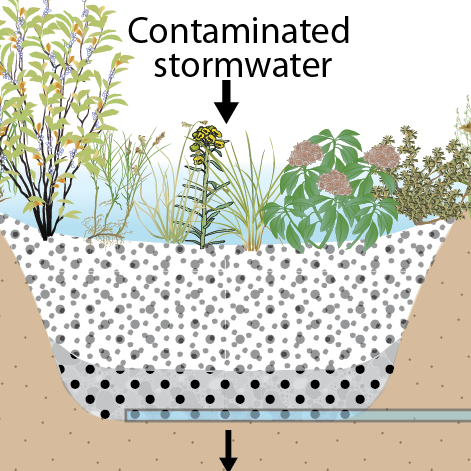
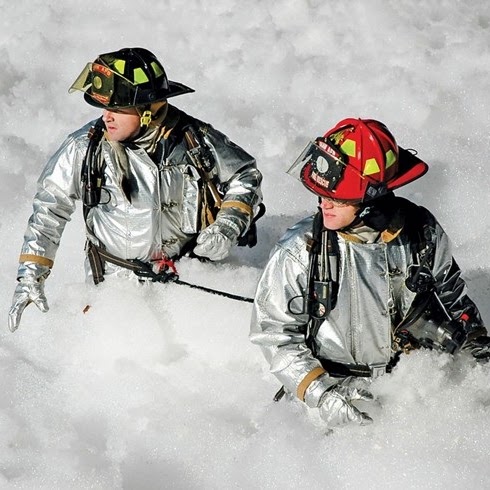
Subsurface Processes
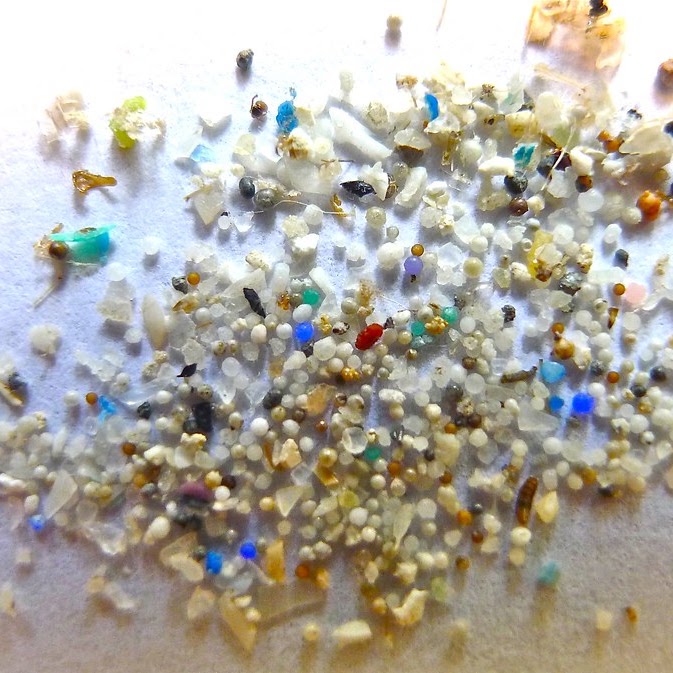
Colloids and microplastics
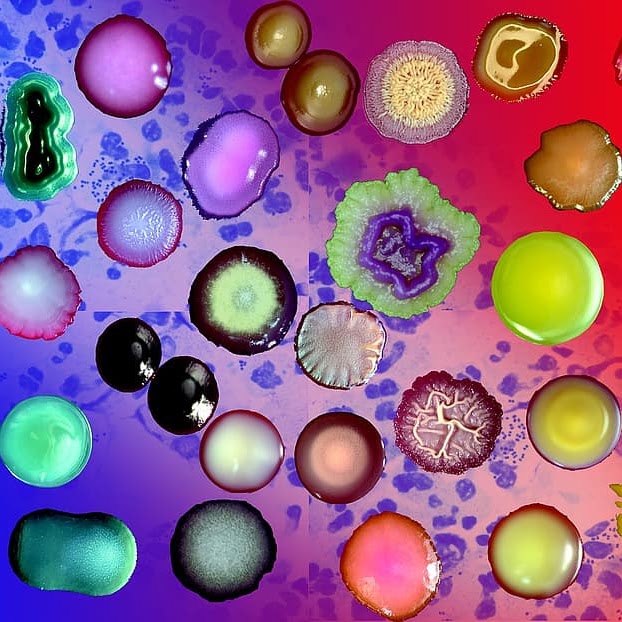
Remediation Design
Climate and soil microbiome
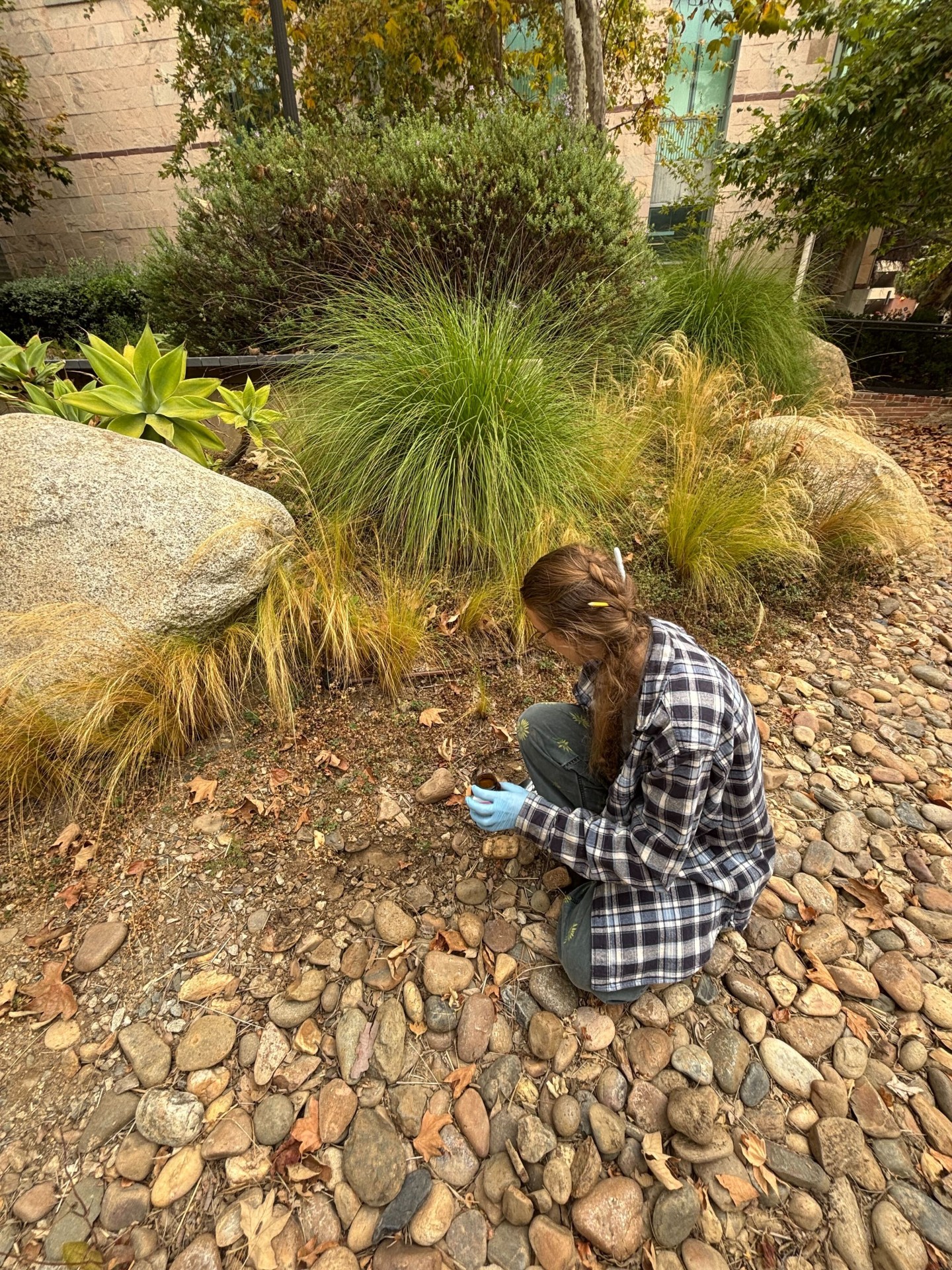
Lab members can send a research photo with a short caption and photo credit. Attach the original image, or include a Drive link.
Submit a research photo ↗See what changes when rain falls on a burned hillside.
Wildfire leaves ash and loose material on the ground. How much stays in place depends on the slope, soil, and remaining vegetation.
Rainfall can move ash and sediment into drainage channels. SEALab studies what wildfire residues mean for stormwater quality and treatment.
Explore wildfire residues and stormwater ↗Follow three possible routes for a particle carried by stormwater.
Particles can stay suspended in runoff and reach a storm drain or stream when flows bypass a treatment feature.
Some particles settle as runoff slows. Others are retained by filter media. Retention depends on the particle and the conditions in the bioswale.
Smaller particles can move with infiltrating water if they encounter accessible flow paths. Their movement depends on particle properties, soil structure, and water flow.
Explore SEALab’s particle transport research ↗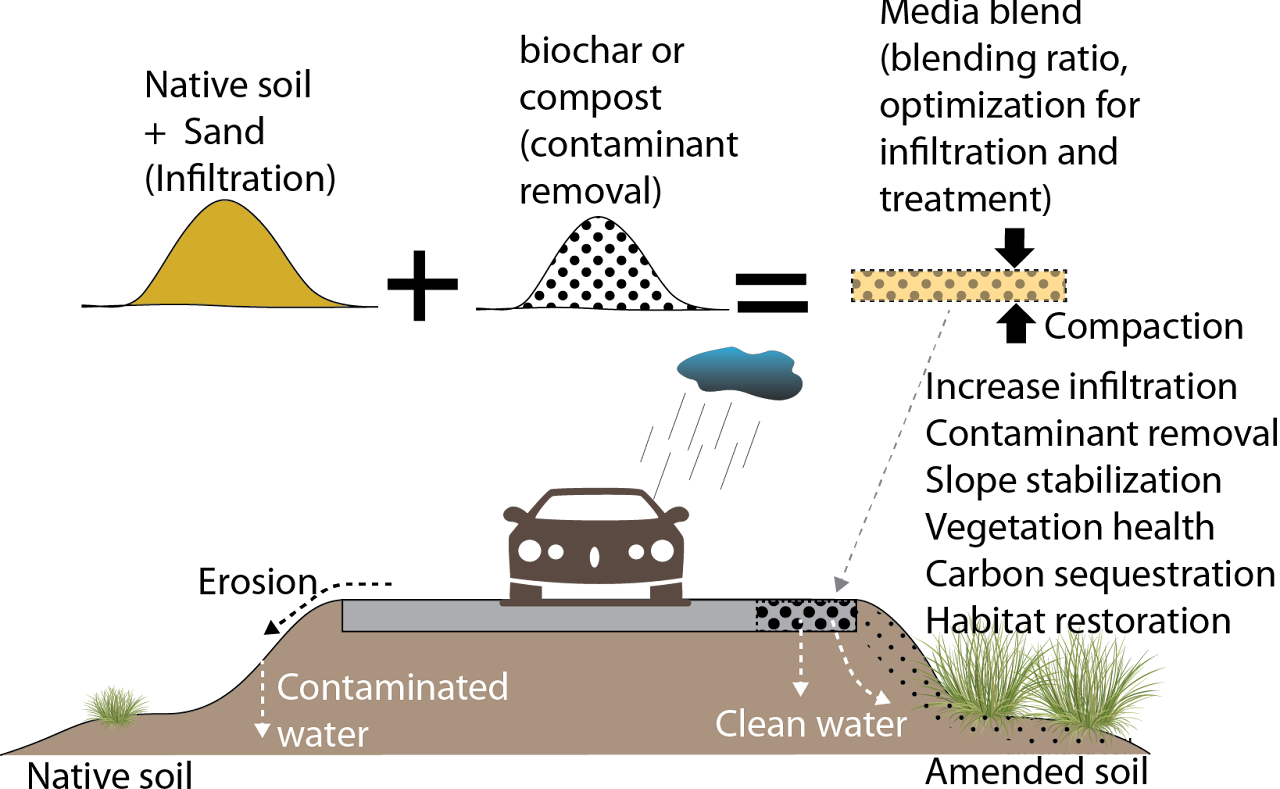
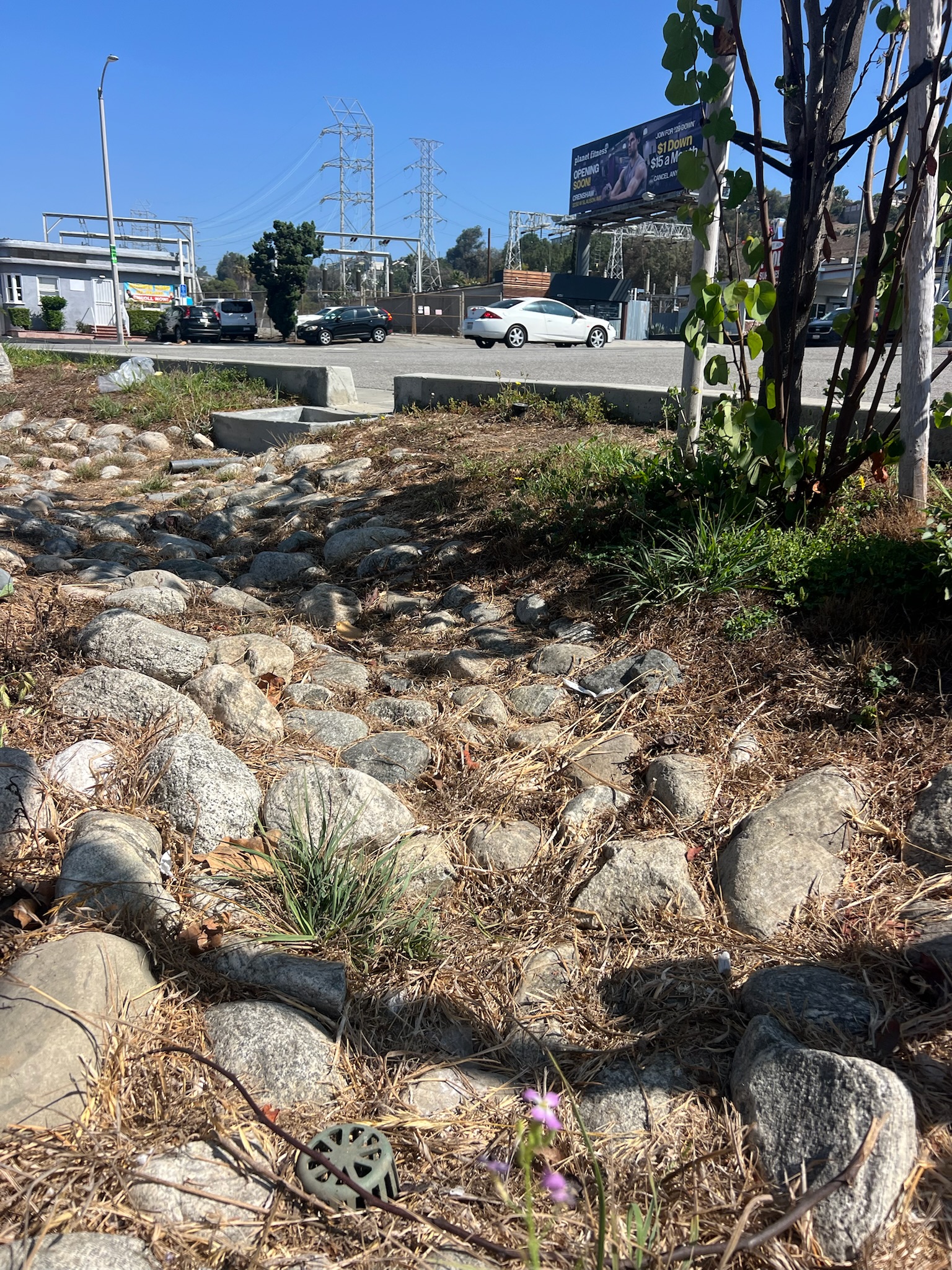
Installing nature-based stormwater treatment systems near roadside could not only mitigate the environmental pollution from road runoff, but also provide multiple other benefits including groundwater recharge, carbon sequestration, and ecological habitat restoration.
Funding Agencies: California Transportation Agencies (Caltrans)
Duration: January 2019 - December 2023.
Principal Investigator: Dr. Sanjay Mohanty (UCLA)
Co-Principal Investigator: Dr. Michael Stenstrom (UCLA)
The overall goal of the project is to develop guidance for construction of soil-based roadside BMPs that would maintain high infiltration and contaminant removal capacities despite compaction. The goal will be achieved through a set of four objectives and sub-objectives on design components, design optimization, analysis of design criteria, and pilot study.
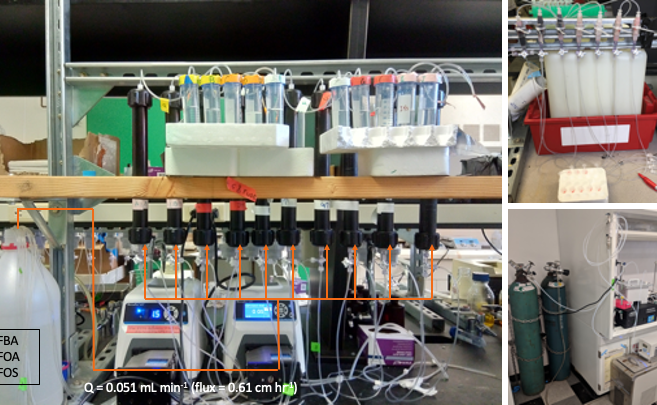
Laboratory column and batch experiments are conducted to examine transport and removal processes of PFAS.
Funding Agencies: Department of Defense/ GSI Environmental, Inc. /Navy (Naval Fac. Eng. Command).
Duration: January 2019 - December 2020.
Principal Investigator: Dr. Shaily Mahendra (UCLA)
Co-Principal Investigator: Dr. Sanjay Mohanty (UCLA)
The overarching goal of the study is to improve current assessment and treatment approaches for PFAS-impacted groundwater at Navy sites. This will be accomplished by completing research that focuses on three key themes: (a) Assessing the extent to which PFAS groundwater plume can migrate at sites with varying matrix properties and PFAS sources. (b) Determining the adsorption capacity of currently available sorbents or sorbent combinations, an alternative to granular activated carbon. (c) Testing the effectiveness of sonolysis to manage PFAS-impacted investigation- derived waste.
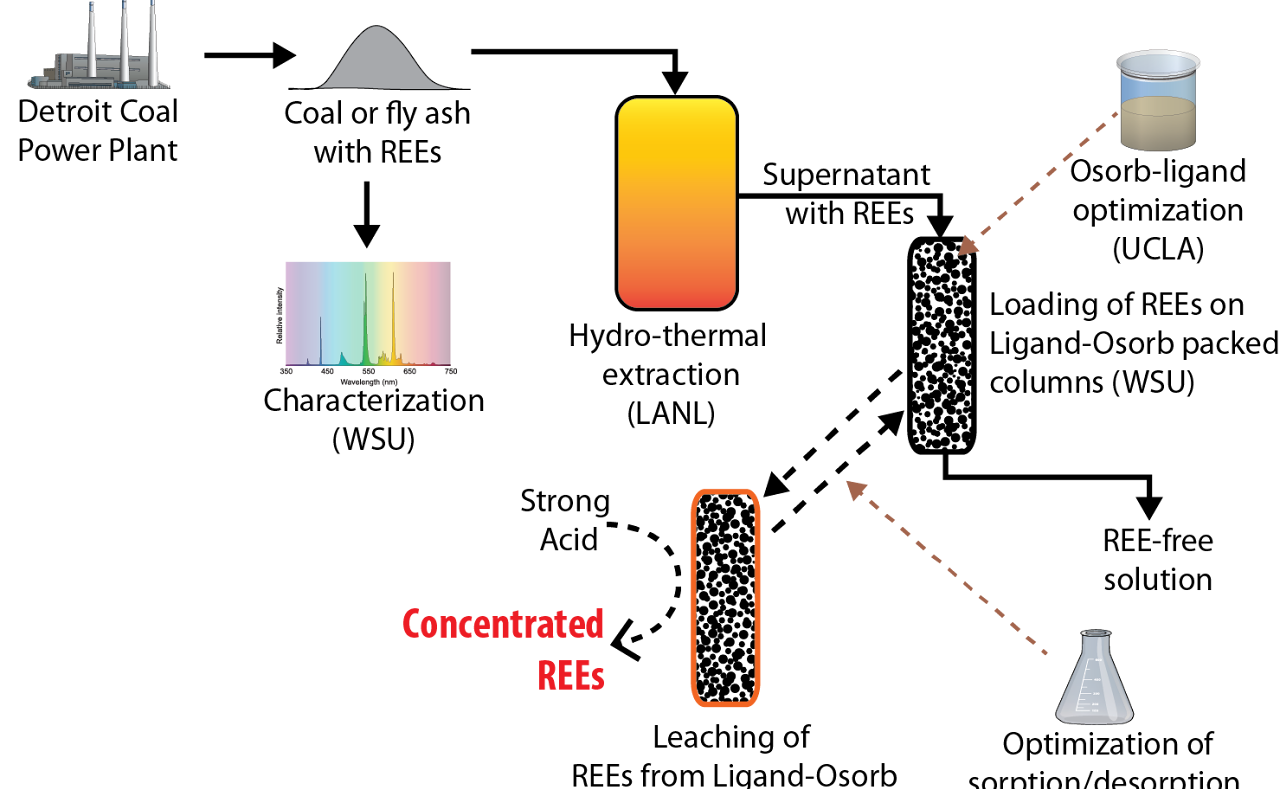
Schematic of project tasks.
Funding Agencies: Department of Energy
Duration: July 2017 - December 2018.
Principal Investigator: Dr. Timothy Dittrich (Wayne State University)
Co-Principal Investigator: Dr. Sanjay Mohanty (UCLA)
The project examines the potential of couple hydrothermal leaching of coal fly ash with the engineering of a custom ligand-associated media to provide an organic solvent-free method of extracting and recovering REEs. We propose the use of hydrothermal leaching under alkaline conditions to rapidly dissolve REEs from coal ash solids to an aqueous solution, transfer REEs from the solution to the Osorb® platform (commercially available swellable organically modified silica - SOMS) functionalized with the appropriate ligand system, and finally extract the REEs to an acidic aqueous system that will have high concentrations of the targeted REEs (2- 10wt%).